Delays frequently occur in fast-paced delivery and logistics operations due to teams’ lack of vision rather than on the road. Even the most effective systems start to malfunction when dispatchers are uncertain about the whereabouts of drivers, the availability of vehicles, or the status of deliveries.
By providing organizations with fleet visibility, a centralized dashboard removes this uncertainty and facilitates faster decision-making, more efficient operations, and improved client experiences.
Manual calls and fragmented updates are no longer necessary for modern logistics. Businesses can go from reactive to fully optimized real-time dispatching and last-mile execution with a unified picture driven by automation and telematics.
1. Centralized Fleet View: The New Nerve Center of Logistics
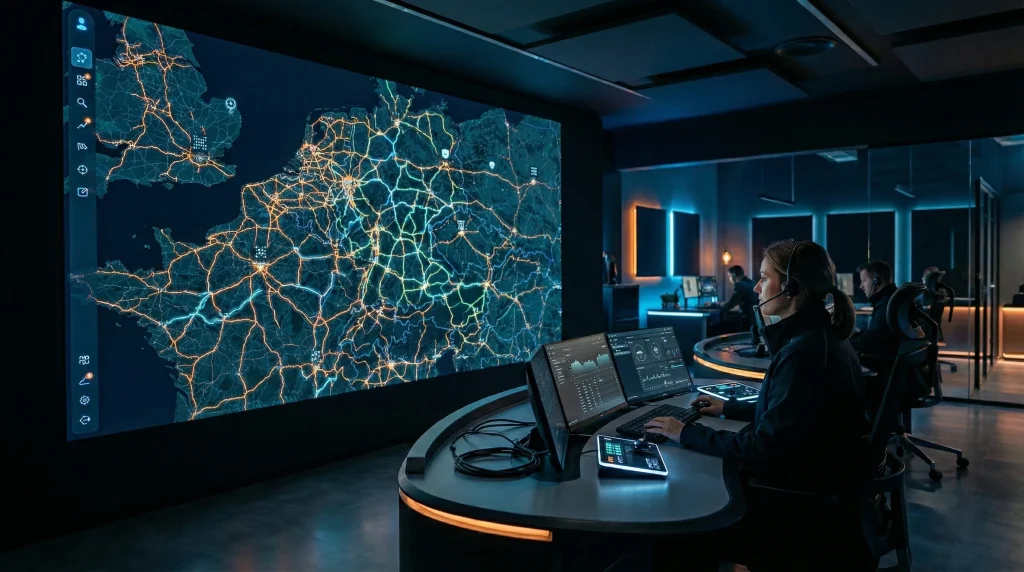
The logistics management system is able to gather real-time data from every single vehicle and show that information in one main centralized dashboard.
The dispatch teams can always see the location of each vehicle, which driver is available, delivery progress, idle or delayed units and vehicles nearest to a location.
This consolidated structure means that there are no more constant back-and-forth calls between different parties, and dispatchers rely on one source of truth for quick decision-making.
2. Real-Time Dispatching with Live Map Visualization
Live map visualization makes it possible for the dispatch teams to see the whole movement of the fleet in real time.
This enables immediate vehicle assignment, avoiding congested routes, monitoring delivery delays, and quick rerouting in emergencies. Dispatchers use real-time GPS-based data to coordinate last-mile deliveries with unprecedented accuracy; they no longer rely on projected positions.
3. Smarter Route Planning Tools for Faster Deliveries
Traditional routing techniques relied on static maps or the driver’s knowledge of the region. Today’s modern route planning tools consider traffic patterns, road conditions, distance analysis, and customer location clusters.
And then produce the optimized routes that save time and minimize the workload on the system. As a consequence, the number of deliveries that fleets can make in a set period of time has increased without any additional cost in terms of resources.
4. Automated Scheduling for Seamless Workflow Management
Automated scheduling speeds up daily coordination and removes the risk of human error. Drivers are automatically assigned to new orders, vehicles with the right capacity, jobs based on proximity, and delivery window priorities.
This guarantees that resource allocation, every vehicle is utilized efficiently, minimizes downtime, and streamlines resource allocation.
5. Work Order Management That Keeps Everyone Aligned
Effective work order management provides supervisors, drivers, and dispatchers with a complete log of all tasks completed during the delivery cycle.
The system logs:
- Assigned orders
- Completed deliveries
- Cancelled trips
- Exception events
Drivers are given digital instructions, which reduces the risk of error and guarantees that each task is carried out precisely and clearly.
6. Proof of Delivery (POD) for Transparent Operations
Every drop-off location is verified by digital proof of delivery (POD), which can be obtained by signatures, pictures, or QR scans.
The accuracy of the delivery is improved, the trust of the client is established, and the disagreements are solved. A total digital record is gathered by the companies, which not only helps but also gives directions in the areas of operations and customer service improvement initiatives.
7. Accurate Delivery Time Estimation Through Data Intelligence
Delivery time estimation has emerged as an essential company advantage.
Businesses can give clients specific arrival times and proactive updates by feeding real-time data into a centralized dashboard.
This lowers consumer anxiety, increases satisfaction, and improves supply chain dependability.
Rolling Through History
Think about it, your car has its own story to tell. Every drive, every turn and every pit stop! it’s all recorded. With GPS tracking, you can roll through history and relive all the places your car’s been. Whether it’s that road trip you took last summer or just the usual daily drives, everything’s there, waiting for you to look back on.
If you’re managing multiple vehicles, history logs help you see each car’s unique patterns and needs.
Why History Logs Matter:
- Need a trip history for a claim? It’s all there, neatly logged and ready to go.
- Knowing your car’s history helps you improve driving habits and be more mindful of fuel usage.
- See how often your car’s used, and spot any changes in its behavior.
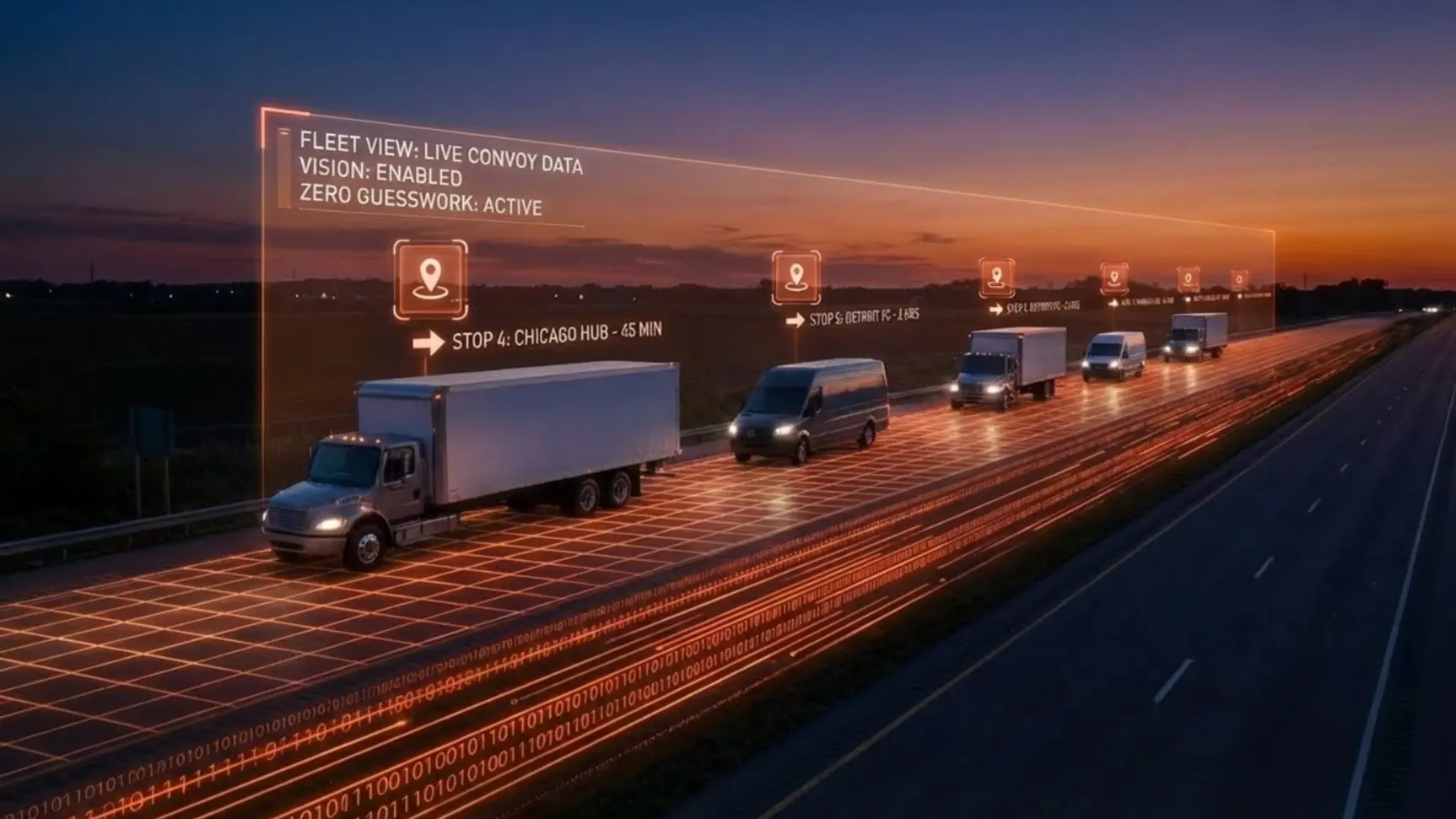
Conclusion: Logistics with Zero Guesswork
A centralized, data-driven dispatch model eliminates the most frustrating query in logistics: “Where is my driver?”
With the combination of real-time dispatching, route planning tools, automated scheduling, and fleet visibility, companies change the way they deal with deliveries from beginning to end.
- Better control
- Faster decisions
- Stronger customer trust
This is the way modern fleets come out on top, through transparency, speed, and complete operational intelligence.