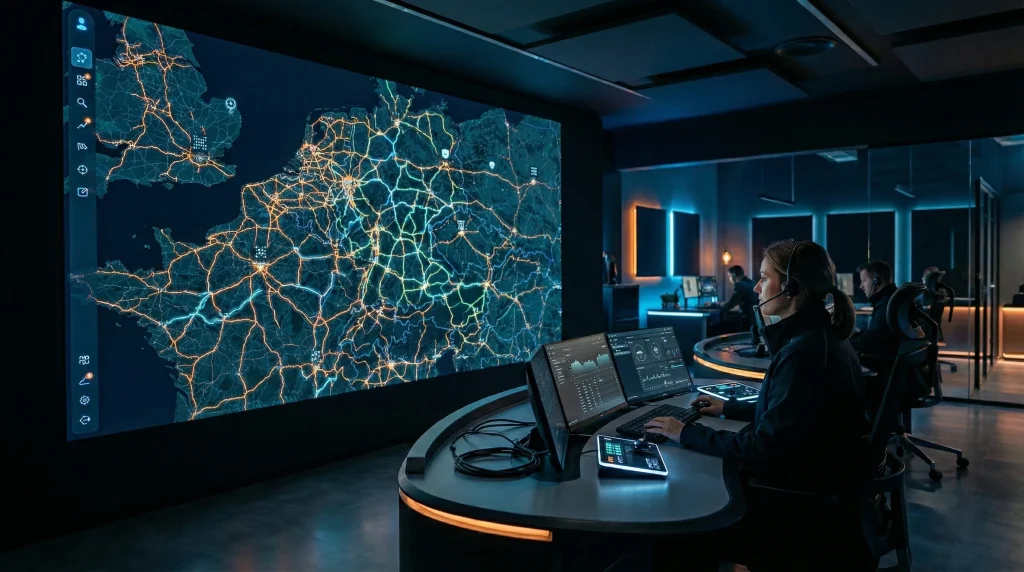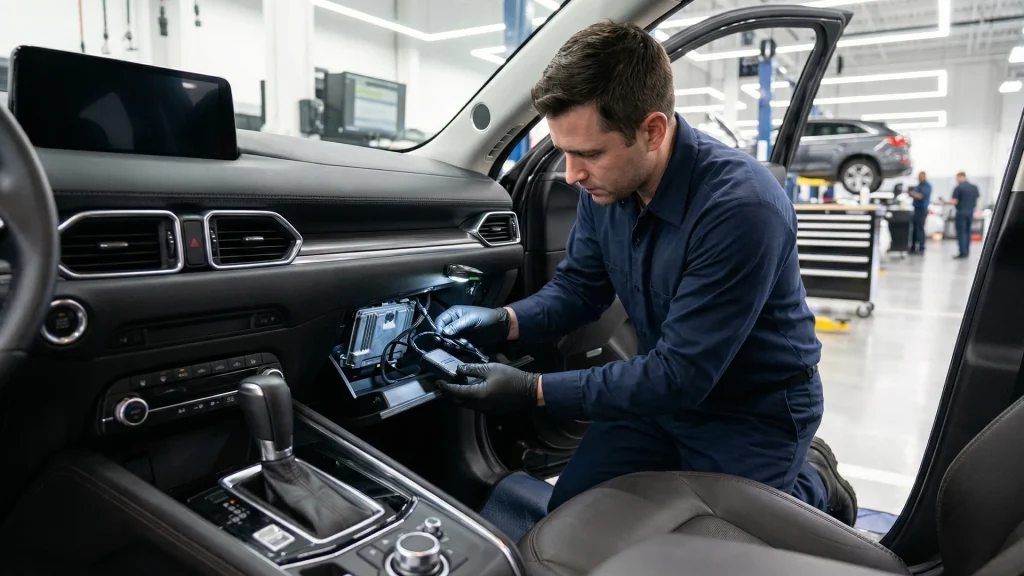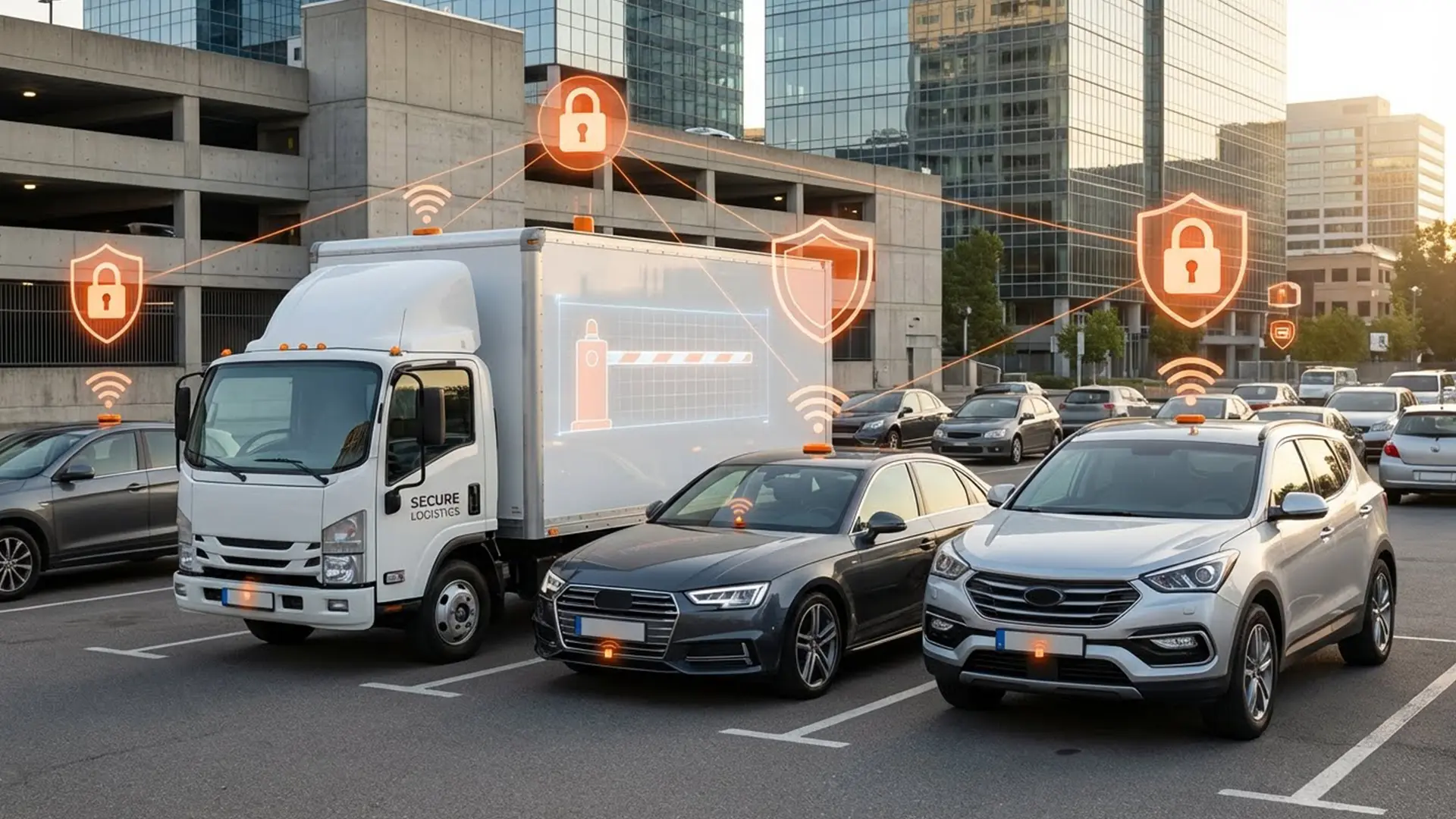
Vehicle tracking has advanced well beyond simple GPS technology.
These days, the Internet of Things (IoT) has significantly changed how cars are connected, managed, and secured. It allows cars, networks, and systems to communicate with one another, forming a connected ecosystem that provides both control and intelligence.
The future of vehicle security in this connected age relies on real-time data exchange, automatic response, and predictive analytics, all made achievable by IoT integration.
1. From Tracking to Connection: Understanding IoT
Any network of devices with the ability to collect and exchange data is included in the definition of the Internet of Things. It describes vehicles with embedded systems and sensors that send data via wireless sensor networks in the automobile sector.
IoT functions via machine-to-machine (M2M) communication, in contrast to traditional tracking, where data travels in a single direction from the GPS device to the user. This lets vehicles share important information in real time without manual intervention, including location, diagnostics, and system alerts.
2. How IoT Enhances Vehicle Security
3. GPS vs IoT Tracking: A Shift in Capability
While GPS is required for detecting real-time location, IoT adds a new level of control and awareness.
GPS VS IoT tracking differs primarily in the scope of information and the intelligence behind it.
A GPS tracker informs users where a vehicle is; an IoT-enabled system tells them how it is operating, why a deviation occurred, and what corrective measures are required.
Through continuous communication among devices and the central cloud-based platform, IoT ensures security systems are always informed and adaptive.
4. The Role of Artificial Intelligence and Data Security
5. Continuous Improvement Through Over-the-Air Updates
IoT integration is capable of carrying out over-the-air (OTA) updates.
This enables manufacturers and service providers to provide software updates, fix security issues, and introduce new features without the need for on-site intervention.
OTA capabilities guarantee that vehicles stay updated with the recent security standards as threats change. These changes contribute to the development of a more adaptable and sustainable ecosystem when combined with telematics technology and edge computing in vehicles.
6. Building the Foundation for Connected Mobility
Conclusion
The evolution from GPS-based tracking to IoT-enabled vehicle ecosystems marks a significant shift in security and efficiency.
Using machine-to-machine (M2M) communication, edge computing, and smart security solutions, IoT lets vehicles in real-time predict, prevent, and respond to risks.
As connected vehicles become standard, IoT will continue to redefine not just how we monitor vehicles, but how we protect them, ensuring every mile is as secure as it is smart.