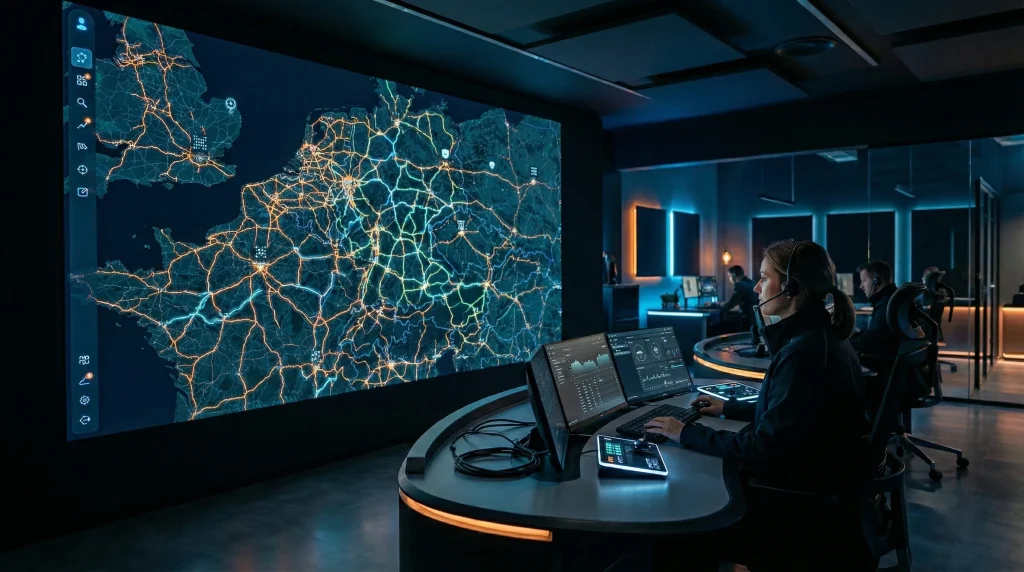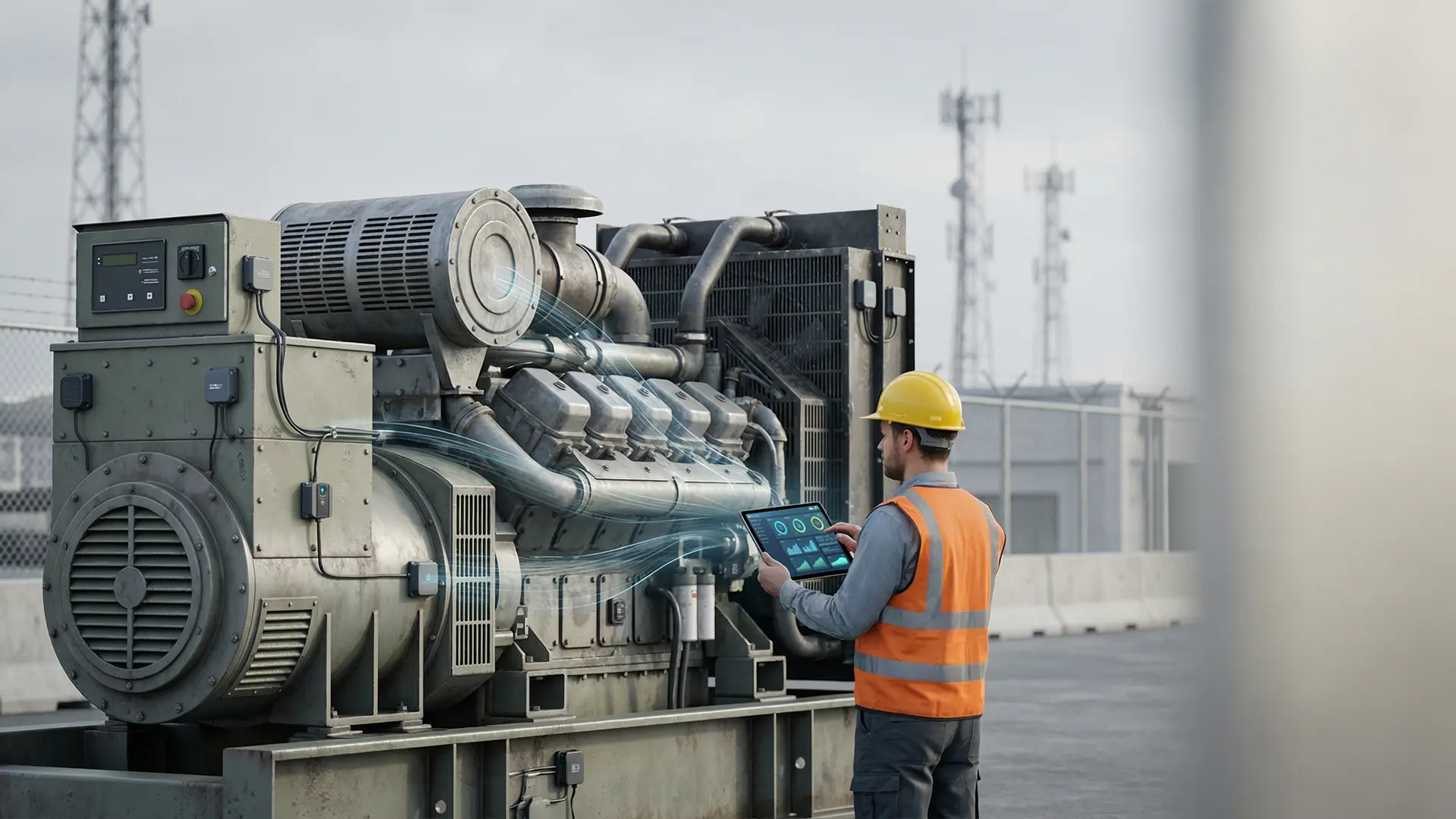
The companies are gradually realizing the need to protect other assets of high value that are not movable at all, such as generators, stationary equipment, and power backup systems.
In case of power outage, equipment misuse, or theft, which leads to the instant shutting down of operations, remote asset monitoring is a must for the company to be reliable and secure.
Modern monitoring systems are not restricted to just providing the geographical position of the assets. They are capable of giving the users an up-to-date situation, communicating the status of the assets, and sending automated alerts for security breaches concerning assets that the companies depend on for stability and continuity.
1. Why Generators Need More Than Locks and Guards
In industrial settings, generators are one of the most misused equipment.
They are constantly at risk of various factors like Power control, Theft of fuel, Overuse, and Failure of machinery during power cuts. Whether they are serving the communication networks, hospitals, building sites, or the corporate sector, they are still facing these risks.
A proactive generator security brings down all these risks by keeping a constant check on the working condition, the amount of fuel, and the pattern of access. Rather than waiting to find out the problems after they cause damage, the companies get the power to act right away and thus avoid the whole thing from happening.
2. Remote Asset Monitoring: The New Standard for Asset Protection
By using connected sensors and IoT monitoring, companies are now able to monitor their crucial assets, regardless of their locations.
Remote monitoring provides real-time information about the engine condition, fuel use, running time, asset usage, position, and movement.
This uninterrupted surveillance guarantees the safety of the major devices all the time and does not require any physical inspections or manual reporting.
3. Fuel Theft Prevention Through Smart Insights
Fuel is still one of the costliest factors when running a generator, and at the same time is more easily stolen.
With advanced monitoring, companies can keep an eye on the fuel literally everywhere with real-time alerts; notice abrupt drops, spot unusual usage, and get immediate warnings for potential theft.
Monitoring plus automatic alarms has allowed companies to strengthen their fuel theft prevention and, at the same time, cut operational losses greatly.
4. Protecting Critical Infrastructure with Real-Time Alerts
Power systems, energy sources, and remote installations are viewed as the critical infrastructure with so much at stake that even a minor fault can lead to a long service interruption.
By using smart sensors and communication devices, real-time alerts regarding unauthorized use, breaking in, system overload, temperature changes, power cut-off and low fuel or odd run cycles are not only sent to the businesses but also made available for their further actions.
The notifications enable the crew to intervene at the problem’s inception stage, thus ensuring seamless functioning of the power backup systems and other critical machines.
5. Smarter Operations Through Asset Utilization Insights
Various entities face the problem of generators either not being used enough or being used excessively, which results in increased charges for operation and poor performance.
Using data-based asset utilization reports, businesses can analyze generator usage frequency, load distribution balance, areas with unusual consumption, and locations needing capacity alterations.
This knowledge enables the companies to improve industrial scheduling and minimize the costs of operation.
6. Maintenance Scheduling That Prevents Downtime
Breakdowns usually happen not due to sudden asset failures, but due to maintenance being ignored or done in an inconsistent manner.
Automation and predicting become part of the process with connected systems for maintenance scheduling.
Monitoring reveals engine performance problems such as battery health, overheating, long idle times, and component degradation.
By moving from reactive to preventive maintenance, companies not only manage to prolong the life of their equipment but also escape the trap of expensive emergency repairs.
7. Stopping Unauthorized Use Before It Becomes a Problem
Unauthorized generator operation will result in the wastage of fuel, overloading of the equipment and in some cases, even ruin the equipment forever.
Remote monitoring enables companies to spot and stop unauthorized use right away by keeping an eye on the running hours, the state of the ignition, and the access control signals.
Thus, it is guaranteed that the generators and the important machinery are operated only by the designated staff and only when needed.
Conclusion: Reliable Operations Begin With Connected Assets
Organizations have already started shifting from generators and backup systems to power supply units with intelligent supervision.
Besides, remote asset monitoring allows companies to keep their equipment safe, reduce theft, enhance utilization, and have an uninterrupted power supply.
In an era where downtime can affect the whole operation, connected monitoring has become indispensable; it’s the very foundation of infrastructure management that is resilient, efficient, and secure.